The Solution · Boys and girls ages 12–17
A Place to Rebuild, Learn, and Grow
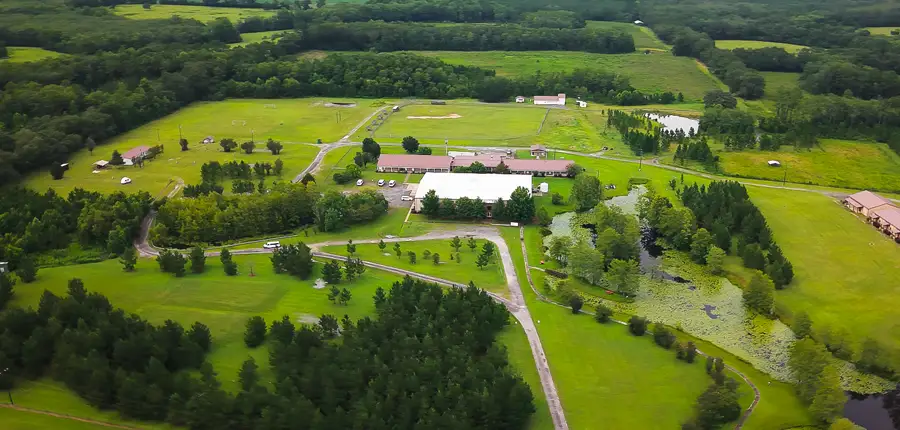
Heartland Academy is a year-round, Christ-centered boarding program for adolescents who need a new direction. Building on more than 50 years of the Heartland approach, our program brings together certified Christian counseling, meaningful mentoring relationships, structured academics, and everyday opportunities to practice responsibility. Boys and girls are served on separate campuses, where each student can grow in a safe, purposeful community and take meaningful steps toward a healthier future.
Who
Boys and girls, 12–17, on separate campuses
Program
Year-round, Christ-centered boarding
Approach
Certified Christian counseling, TBRI-trained staff
Academics
Accredited through ILCS and Cognia
The program, in six parts
Every day is built from these six pieces.
One-on-One Counseling
Group Mentorship
Classroom & Academics
Activities
Team Challenges
Community Meals
One-on-One Counseling
Individual Support for the Work That Matters Most

A struggling teen rarely needs one more person to lecture them. They need a trusted adult who will listen carefully, speak honestly, and help them take the next right step. At Heartland Academy, every student is assigned a primary counselor: a trained, certified Christian counselor who gets to know the student personally and helps guide their growth throughout the program.
Individual counseling creates space to talk through concerns that may be difficult to share in a group and to focus on the areas that most affect daily life—behavior, emotional expression, relationships, choices, and the obstacles standing between a student and healthy progress. Each student receives an intensive individual session every two weeks, supported by daily attention to the goals and skills addressed in counseling. In moments of crisis, immediate assistance is available so a student is not left to face a difficult moment alone.
Our team is trained in Trust-Based Relational Interventions (TBRI), a trauma-informed approach to behavioral management. This training helps staff respond with understanding, consistency, and appropriate structure as they help students identify unhelpful patterns, set meaningful goals, and practice healthier responses. Biblical truth and faith-based guidance are woven into this work so that growth is not only about getting through a hard day, but also about developing character, purpose, and enduring hope.
Support continues beyond a scheduled conversation. The rhythm of school, recreation, responsibilities, and relationships gives staff opportunities to notice progress, encourage a student, and address concerns with compassion. Students learn that honest reflection is not punishment; it is a skill that helps them make wiser choices, repair trust, and keep moving forward.
Families are part of the process, too. Heartland Academy provides opportunities for calls, counseling, visits, parent weekends, support groups, and workshops so parents can stay connected to their child’s growth. The goal is to help each adolescent understand their story, build real-life skills, restore trust, and discover that change is possible—one honest conversation, one practiced skill, and one wise choice at a time.
Key features
- An assigned primary counselor for every student
- Trained, certified Christian counselors
- One intensive individual session every two weeks
- Daily support for counseling goals and immediate help in a crisis
- Team trained in Trust-Based Relational Interventions (TBRI)
- Christ-centered coaching, mentoring, and skill-building
- Family calls, counseling, visits, parent weekends, support groups, and workshops
Group Mentorship
Grow Stronger in a Community That Cares
Key features
- Guided group conversations and shared peer encouragement
- Devotions, chapel, and church participation at every campus
- Faith-based character-building instruction
- Practice in communication, conflict resolution, and accountability
- Daily relationship-building with caring staff and a primary counselor
- Positive incentives that encourage student leadership and peer support
- Family calls, counseling, visits, parent weekends, support groups, and workshops
The relationships around a teen can either reinforce harmful patterns or make a new way of living feel possible. Heartland Academy intentionally builds a community where respect, responsibility, integrity, and encouragement are expected. Students spend meaningful time with peers and staff who call them forward, model healthy connection, and remind them that they do not have to carry every challenge alone.
At every campus, guided group conversations, devotions, chapel, and church participation are part of the shared program. These moments give students an opportunity to learn from common experiences, hear hope from peers, and develop the confidence to speak honestly about the choices that shape everyday life. Students practice listening, expressing themselves with respect, receiving feedback, resolving conflict, and taking responsibility for their part in a situation. Faith-based character-building instruction and Scripture provide a common language for examining choices and practicing a different response.
This is a community built around relationship, not isolation. Each student’s primary counselor and the wider staff team invest in knowing them well. Everyday moments—devotions, school, activities, responsibilities, and conversations—become opportunities to build trust. As students make progress, they learn that leadership is expressed through humility, consistency, service, and a willingness to encourage someone else. Positive incentives connected to student leadership help motivate students to set a good example and strengthen their peers.
Parents are not expected to stand outside the process. Heartland Academy offers calls, counseling, visits, parent weekends, support groups, and workshops at every campus. These touchpoints help families stay engaged, communicate honestly, and plan for the future together.
Our aim is not simply for students to follow rules while enrolled. It is for them to learn how to belong to a healthy community, receive correction without shutting down, offer encouragement without pretending, and carry those relational skills home.
Classroom & Academics
A Fresh Start for School—and the Future
Key features
- Licensed and accredited through ILCS and Cognia
- Fully online, transferable curriculum
- Individual academic plans informed by transcripts and prior records
- Teacher-supported learning, tutoring, remediation, and credit recovery
- Dual-enrollment options at every campus
- NWEA MAP Growth testing
- Monthly academic updates and quarterly progress reports, at minimum
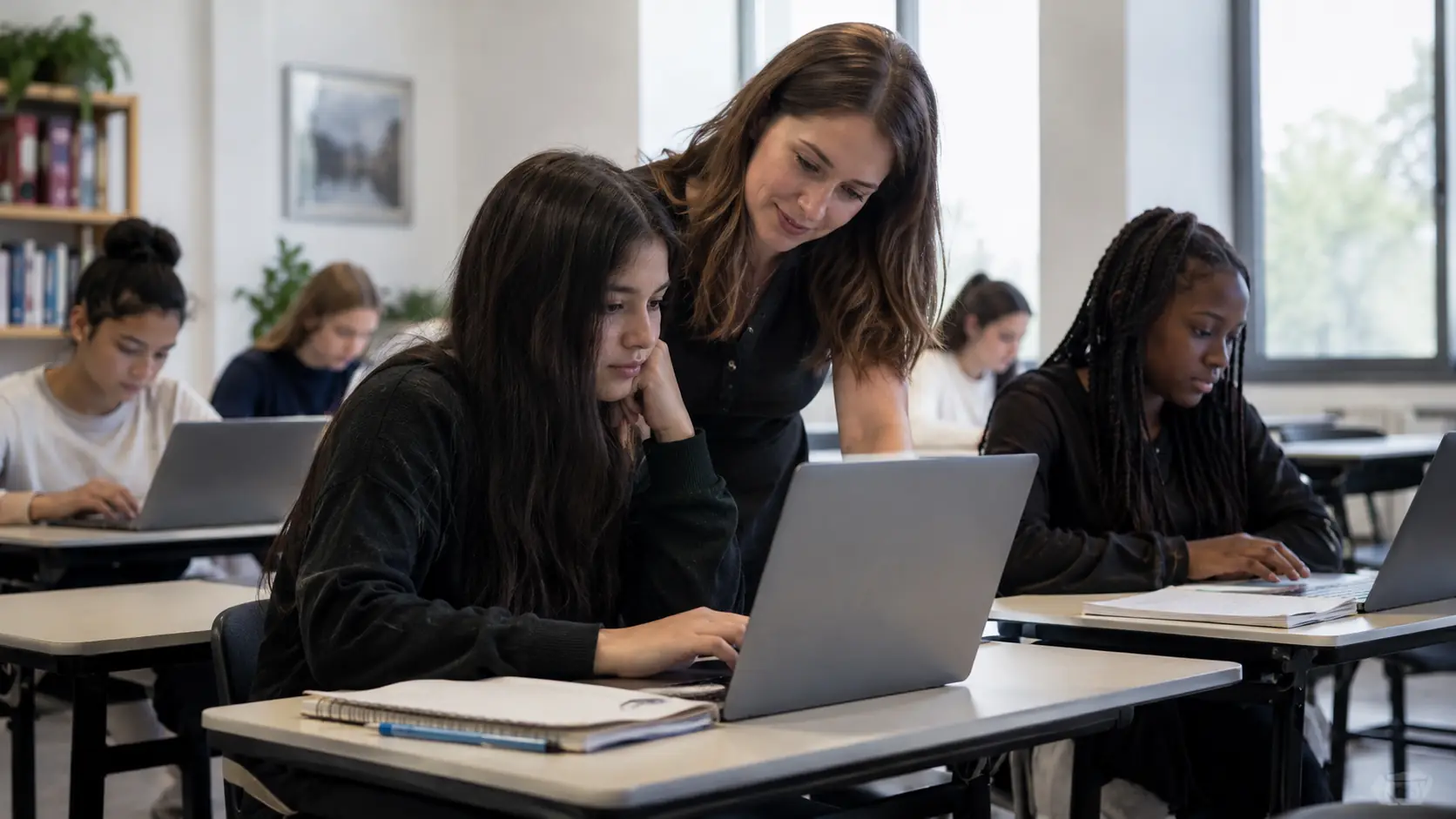
For many families, school has become a source of frustration, avoidance, or discouragement. Heartland Academy helps students experience education differently: as a steady, achievable path toward confidence and a future worth working for. Our year-round academic model gives adolescents time to focus, build momentum, and make meaningful progress toward high school completion.
Heartland Academy is licensed and accredited through the International League of Christian Schools (ILCS) and Cognia. Students use a fully online, transferable curriculum, with staff support to help them stay engaged and move forward. Instruction is individualized because students do not all arrive at the same place. Staff review prior school records and transcripts, work with parents and students to shape an individual program of study, and help each student set academic goals that fit current needs and future plans.
Students receive teacher-supported learning, individual workspaces, close supervision, and tutoring as needed. The academic experience supports core requirements, remediation, credit recovery, and future educational goals while teaching students how to manage their time, ask for help, and follow through on demanding work. Dual-enrollment options are available at all Heartland Academy campuses, giving eligible students another way to pursue their next steps.
Progress is measured and communicated consistently across the organization. Students complete NWEA MAP Growth testing, and all campuses follow the same transcript, progress-reporting, and parent-communication practices. Families receive academic updates at least monthly and progress reports at least quarterly, providing a clear view of effort, achievement, and goals ahead.
Academic growth is about more than a transcript. The daily routine reinforces responsibility, problem-solving, self-control, respect, and the satisfaction that comes from completing hard work. As students begin to see themselves as capable learners, they gain momentum that can carry into graduation and beyond Heartland Academy.
Activities
Active Days That Build Confidence and Joy
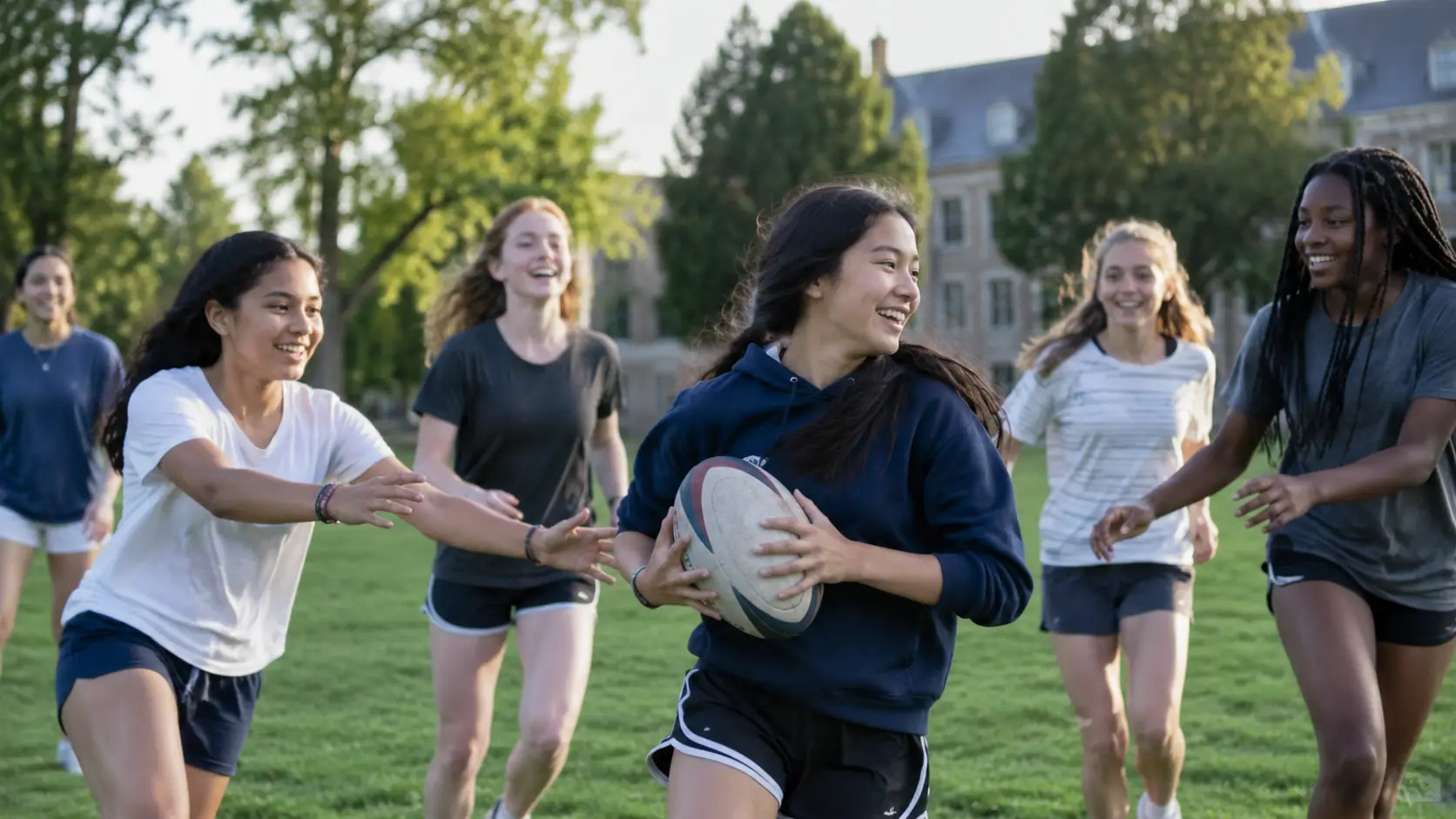
A healthy routine needs room for joy, movement, exploration, and accomplishment. At Heartland Academy, activities help students step away from old patterns and engage with life in constructive ways. Physical activity, recreation, time outdoors, and purposeful experiences give students a chance to use their energy well, discover new strengths, and experience the satisfaction of steady effort.
Every program explores standard school sports, including basketball, softball, pickleball, aerobics, soccer, volleyball, and similar activities. These experiences are part of the work of growth. When students try a new skill, participate alongside peers, or keep working after a setback, they have a practical setting in which to build resilience, cooperation, responsibility, and confidence. Staff are present in these everyday moments to offer encouragement, build trust, and help students connect what they are learning to the choices they make off the field, outside the classroom, and at home.
Community service projects, off-campus trips, and structured chores are also standard parts of Heartland Academy programming. Service gives students a chance to contribute beyond themselves; trips broaden their experiences; and everyday responsibilities reinforce reliability and care for a shared community. All five programs gather each year for Heartland Academy summer camp, a shared opportunity for students from across the organization to build friendships, participate together, and celebrate growth. Students also have the opportunity to participate in a mission trip while in the program.
Activities give adolescents a healthier answer to boredom and isolation. They learn that enjoyment can be constructive, that confidence is built through participation, and that they have more to offer than the patterns that brought them to Heartland Academy. Each campus adds its own experiences on top of this shared foundation; see the campus pages for what makes each location distinct.
Key features
- Standard school sports at every campus: basketball, softball, pickleball, aerobics, soccer, volleyball
- Active, supervised recreation that supports healthy routines
- Community service projects, off-campus trips, and structured chores
- Annual all-campus Heartland Academy summer camp
- Opportunity to participate in a mission trip while enrolled
- Staff encouragement and relationship-building in everyday moments
Team Challenges
Challenges That Teach Teamwork and Character
Key features
- Shared challenges that practice communication and teamwork
- Community service projects and off-campus trips at every campus
- Structured chores that build stewardship and reliability
- Home economics credit through chores and cleaning
- Positive incentives for student leadership and peer encouragement
- Annual all-campus summer camp and mission-trip opportunities
- Staff-guided reflection on accountability, problem-solving, and perseverance
Teens build confidence when they learn that difficult moments do not have to end in withdrawal, conflict, or giving up. At Heartland Academy, team challenges create practical opportunities to pause, communicate, cooperate, and see a task through. The goal is not to create pressure for its own sake. It is to give students healthy, achievable challenges that help them develop character and understand how their choices affect the people around them.
Shared activities, community service projects, and off-campus trips give students a chance to practice working with others in real time. They learn to listen, follow directions, encourage a teammate, adapt when a plan changes, and contribute their strengths to a shared goal. The task becomes a starting point for meaningful reflection: What helped the group move forward? How did a student respond when something felt difficult? What would a wiser next step look like?
Responsibility is also learned through structured chores and the everyday work of caring for shared spaces. Completing assigned tasks shows students that their effort matters. Working alongside others teaches stewardship, reliability, respect for property, and pride in a job well done. Students may earn home economics credit for participating in chores and cleaning, helping them connect daily responsibility with a practical academic outcome.
Leadership grows through small, consistent acts of responsibility rather than empty titles. Positive incentives tied to student leadership encourage students to set a good example, support peers, and contribute to the community. The annual all-campus Heartland Academy summer camp and opportunities for mission-trip participation offer additional settings in which students can serve, cooperate, and develop confidence.
Over time, students can replace isolation and negative peer pressure with the skills to cooperate, lead with respect, and contribute to a healthy community. They leave these experiences with more than a completed task. They have practiced communication, self-awareness, accountability, and perseverance that can serve them in family life, school, work, and the relationships ahead.
Community Meals
Nourishment, Routine, and Community Around the Table
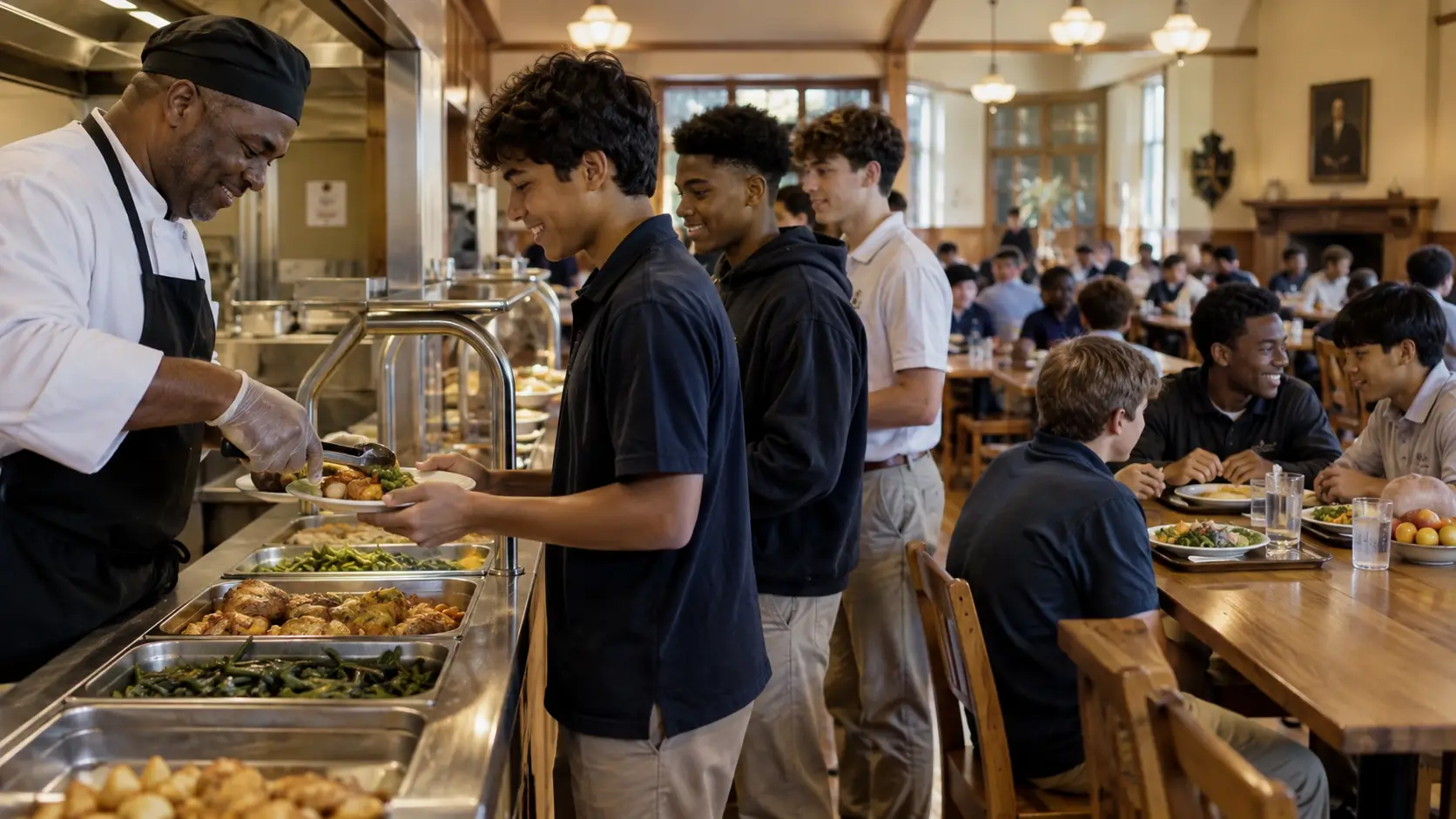
Food safety and nutrition come first at Heartland Academy. Every program has ServSafe-certified kitchen staff who prepare meals on site and provide knowledgeable oversight of food handling and kitchen practices. All meals are approved by the program director and are planned to promote proper nutrition consistent with national school nutrition standards. These commitments help families know that meals are approached as an essential part of a student’s daily readiness and growth.
Meals are served cafeteria-style, plated, giving students a predictable and orderly opportunity to pause, refuel, and return to the day ready to learn and participate. Shared meals also create everyday moments for respectful conversation, gratitude, encouragement, and a sense of belonging. Students practice arriving on time, taking part in a shared routine, listening to others, and treating the people around them with dignity.
Mealtimes can also strengthen practical life skills. Through chores and cleaning, students contribute to the care of shared spaces and may earn home economics credit for their participation. Holidays are made special with occasion-specific meals, including celebrations such as the Fourth of July, Thanksgiving, Christmas, and Easter. The goal is more than a meal served: it is a safe, nourishing routine that supports physical well-being, practical responsibility, and healthy community.
Key features
- ServSafe-certified kitchen staff at every campus
- Meals prepared on site and approved by the program director
- Nutrition consistent with national school nutrition standards
- Cafeteria-style plated meal service
- Home economics credit available through chores and cleaning
- Special holiday meals for the Fourth of July, Thanksgiving, Christmas, and Easter
Campus grounds & living spaces
The seventh piece is the place itself.